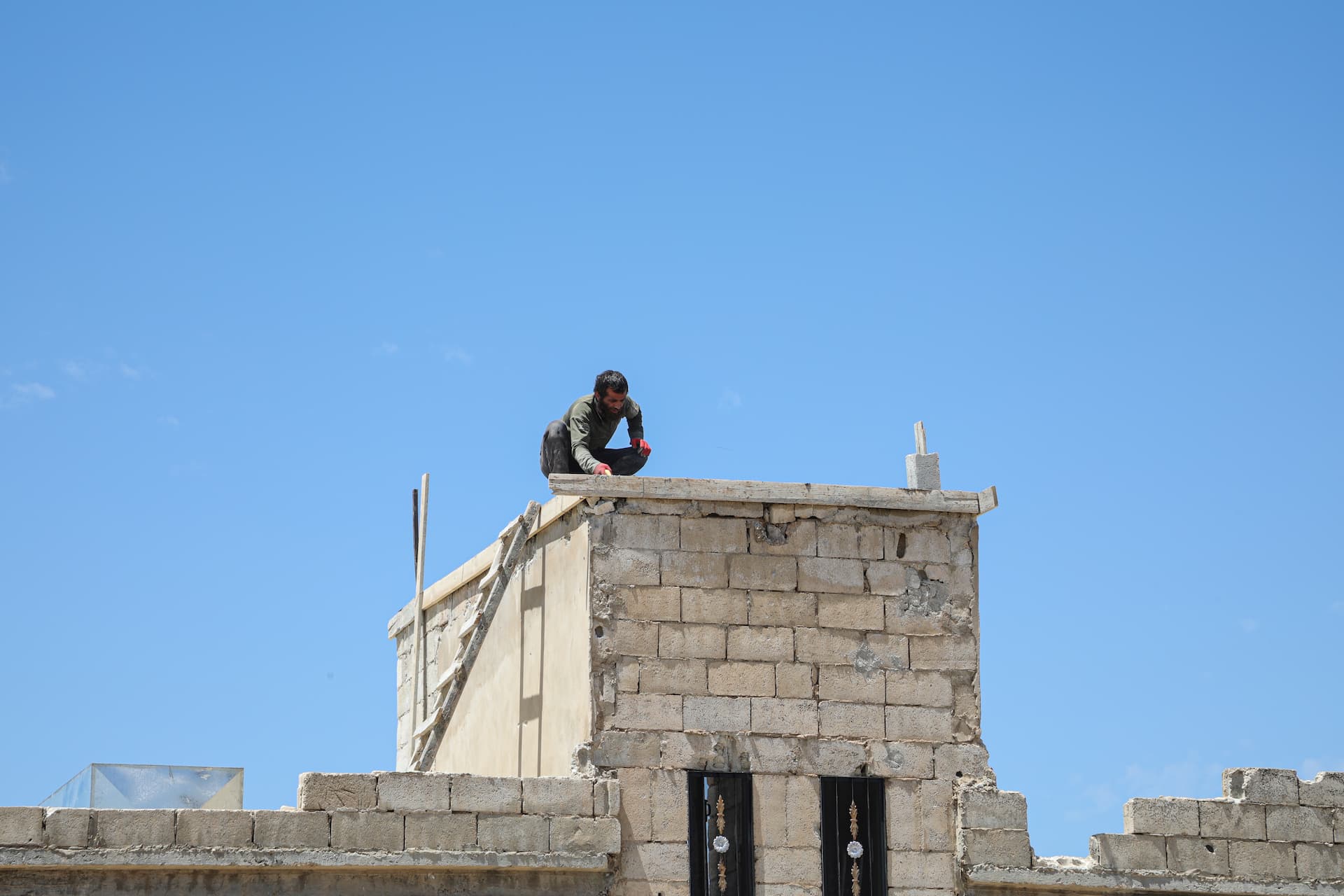
Across Syria, towns once full of life are now half-empty. Families rebuild houses with old bricks and plastic sheets. Schools and hospitals lie in ruins. Public services barely function.
As one elderly man put it at the border of Naseeb after being away from home for over 10 years,
“I would rather suffer on my own land than in the land of a stranger.”
For many, return is not the end of hardship.
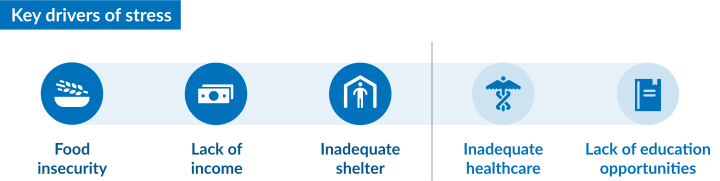
UNHCR’s protection monitoring inside Syria paints the same picture. Among nearly 24,000 interviewed returnee and host-community households, food insecurity, lack of income opportunities and inadequate shelter consistently emerge as the top unmet needs. Around one quarter of refugee and IDPs returnees report that they or a family member lacks some form of documentation. Around 15 per cent of refugee and IDP returnees report that their homes were destroyed upon return, while some face looting, rental or inheritance disputes or threats of eviction. Most returnees feel safe at any time of the day, but roughly one in five report feeling unsafe at night, commonly attributed to limited law enforcement presence, inadequate street lighting, and overall criminality. About two in five returnees show signs of stress-related symptoms linked to unemployment, food insecurity and limited access to services.
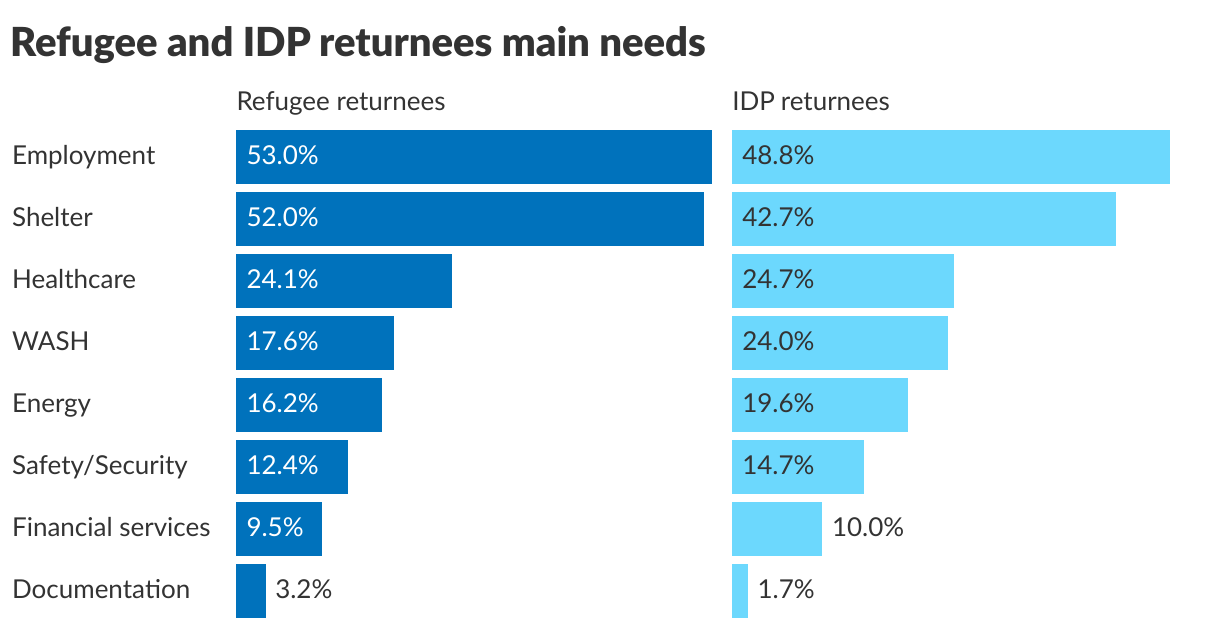
UNHCR’s protection monitoring inside Syria shows that shelter is the single most defining need for families who have returned. Refugee returnees report markedly higher shelter needs than both IDP returnees and communities who never left, reflecting the severe damage many find upon arrival and the challenges of re-establishing housing after years abroad. Employment also stands out as a critical pressure point for refugee returnees, who report greater difficulties securing stable income compared with IDP returnees. WASH needs are particularly pronounced among IDP returnees, mirroring the extent of infrastructure damage in many return areas. Safety concerns tend to decrease after return, but documentation challenges remain return-specific, affecting refugee returnees far more than other groups as they work to re-establish civil status and recover lost papers. Most importantly, location matters more than timing: households returning to areas other than their original homes face substantially higher shelter needs than those able to return to their own neighbourhoods, showing how the place of return strongly shapes the conditions families face.
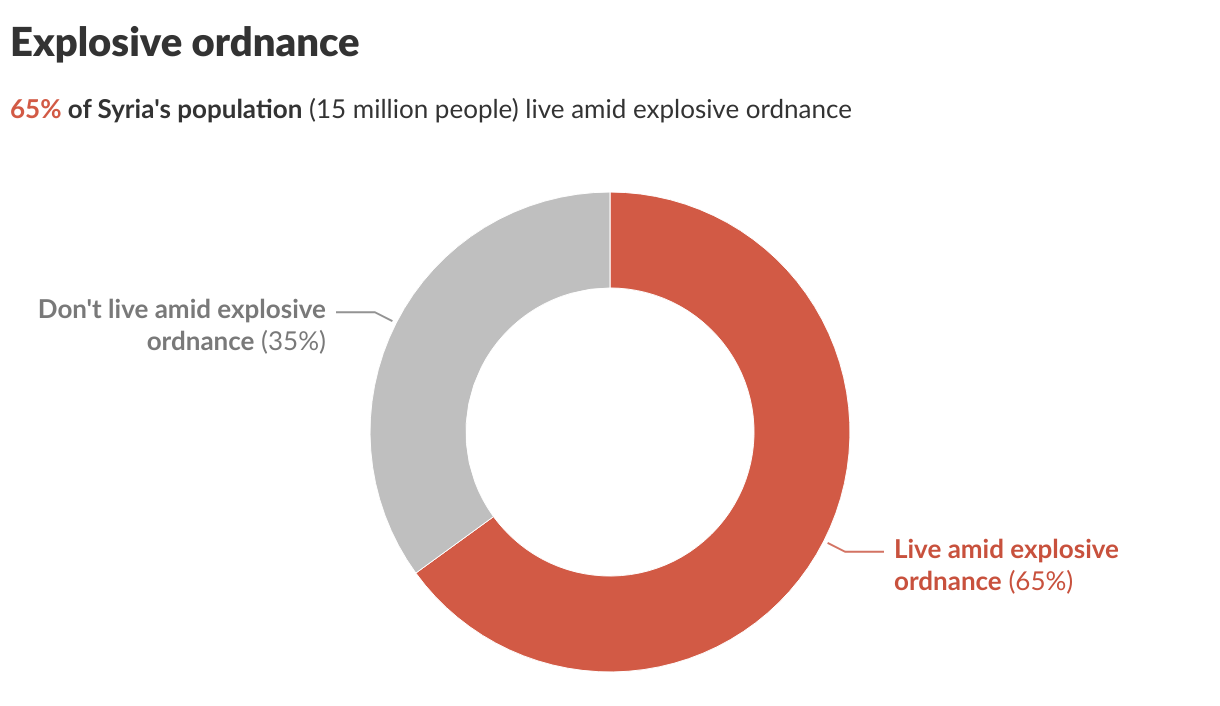
Syria is one of the world’s most contaminated countries for mines and explosive hazards. Fifteen million people, 65% of the population, live amid explosive ordnance. More than 1,538 casualties have been recorded since late 2024. Mines affect fields, roads, and playgrounds. They make activities like farming and reconstruction dangerous. UNHCR works with UNMAS, HALO Trust, and SARC to raise awareness and to coordinate clearance. The progress is slow, but each cleared street opens a path towards a normal life.
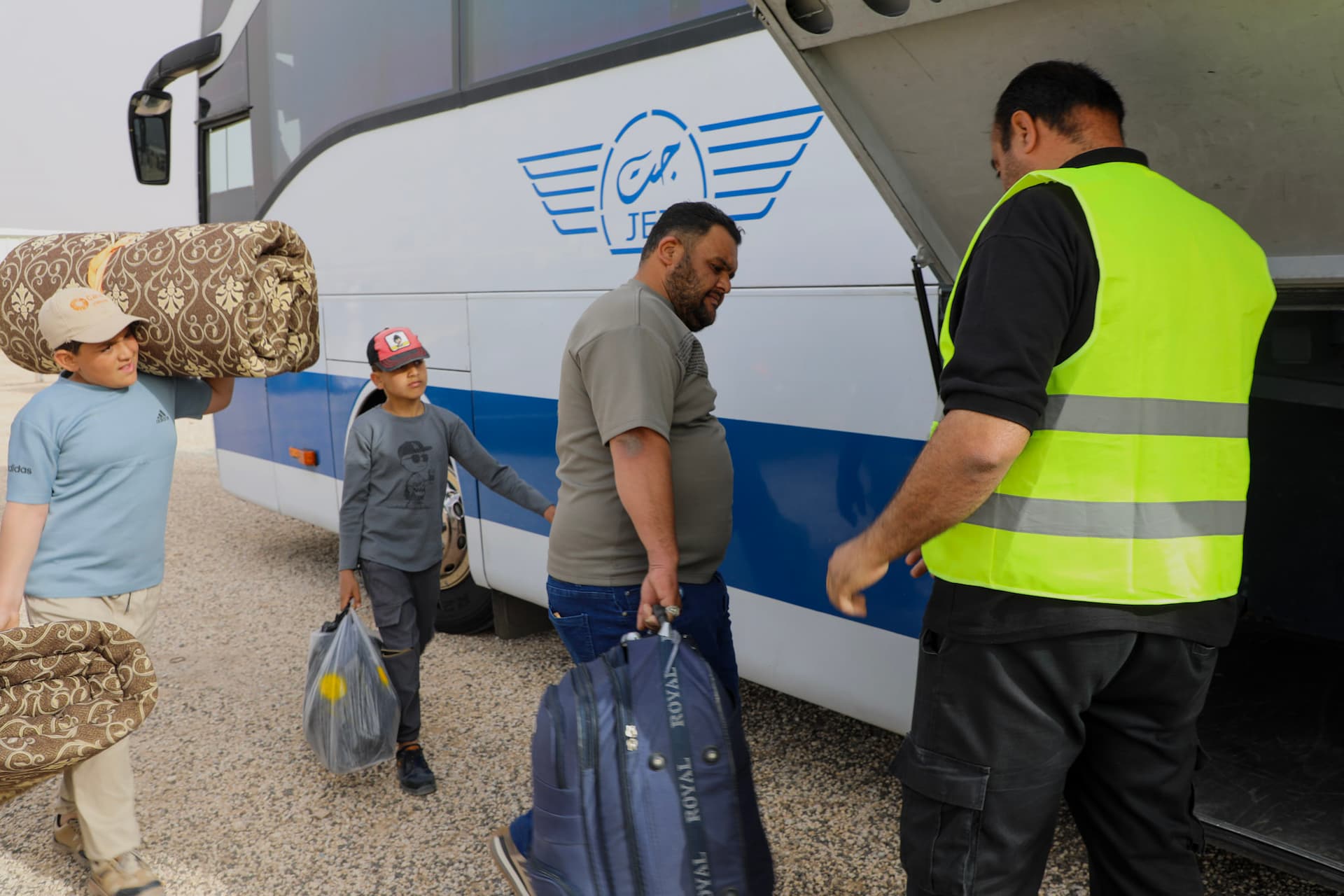
UNHCR leads efforts to make voluntary returns safe and dignified. Working in close coordination with the General Authority for Land and Sea Ports, designated ‘support windows’ for returnees have been established at 11 official border crossings. These windows are operated by the authorities, who have been trained and equipped by UNHCR to provide information on available services and assistance.
By 31 October 2025, 16,766 families (65,231 individuals) had consented to share their basic information, such as contact details, through these support windows, enabling UNHCR to follow up on the situation of returnee families. In addition, 5,953 families received assistance to cross as part of organised voluntary return movements supported by UNHCR Syria. Every return is documented, verified, and linked to follow-up support to help families reintegrate safely once they are back home.
These early points of contact with refugees as they return also shows that documentation gaps, damaged housing and difficulty meeting basic needs are among the most recurrent issues reported by families after arrival.
Across Syria today, the work of rebuilding lives often begins in small, everyday moments. UNHCR supports this recovery through 71 community centres spread across all 14 governorates, helped by 81 mobile teams and near to 1,500 local outreach volunteers who know the neighbourhoods, the families, and the stories behind every closed door.
These centres are places where people can find the support they need. They offer counselling, legal advice for families trying to recover lost documents or property, and practical skills training to help people earn a livelihood and regain their dignity. Six dedicated legal clinics focus on some of the most complex cases, from proving inheritance to reclaiming a home left years ago.
Protection monitoring findings reflect the importance of this work: lack of civil documentation, unresolved housing or property disputes and psychosocial distress are among the most common challenges families bring forward upon return, with documentation issues alone affecting roughly a quarter of refugee and around 15 per cent of IDP returnee households.
For Syrians outside the country considering their future, the Syria Is Home website provides clear, verified information in an often-confusing landscape. Already accessed by more than 85,000 users across four countries, it helps families understand their options before making deeply personal decisions about return, safety, and home.
At its heart, this is not just about services. It is about restoring confidence, reconnecting communities, and helping individuals imagine a future again: one step, one conversation, one family at a time.
Recovery often begins with something simple: a safe place to sleep and a way to stand on your own feet again.
UNHCR has supported families returning home by completing or finalizing repairs on 4,090 houses and providing cash-for-shelter to help many more rebuild damaged roofs, walls, and doors. These are not just construction projects; they are where childhoods, family meals, and daily life can start again.
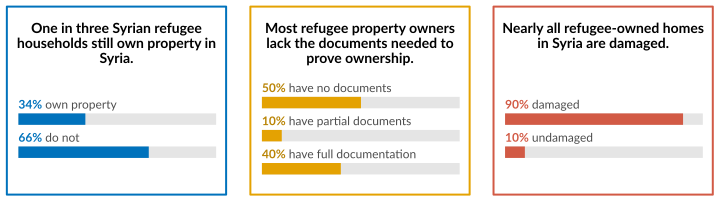
For many families, ‘going home’ means returning to a damaged or contested property. Across the region, more than one third of surveyed refugee households report owning a house or land in Syria, yet among these owners only around two in five say they have documents for all of their property, and more than half report having no documents at all. Over nine in ten houses are reported as damaged or destroyed, with just a small fraction described as undamaged.
More than 651,900 people have received basic household items, blankets, lamps, mattresses, kitchen sets, the things that make an empty room feel like a home.
To help families restart their livelihoods, 25,965 households received reintegration grants of USD 600, a small but meaningful boost that can stock shelves, repair tools, or buy seeds for a new season.
Across communities, small livelihood projects are helping youth and women learn skills, reopen shops, and rebuild workshops.
Each repaired home, each new job, and each reopened storefront is a quiet but powerful sign that recovery is not only needed, it is already underway.
UNHCR’s protection monitoring further underlines the scale of these challenges: shelter consistently appears among the top three unmet needs across returnee groups, and around one quarter of households report uncertainty about being able to remain in their current accommodation over the next six months.
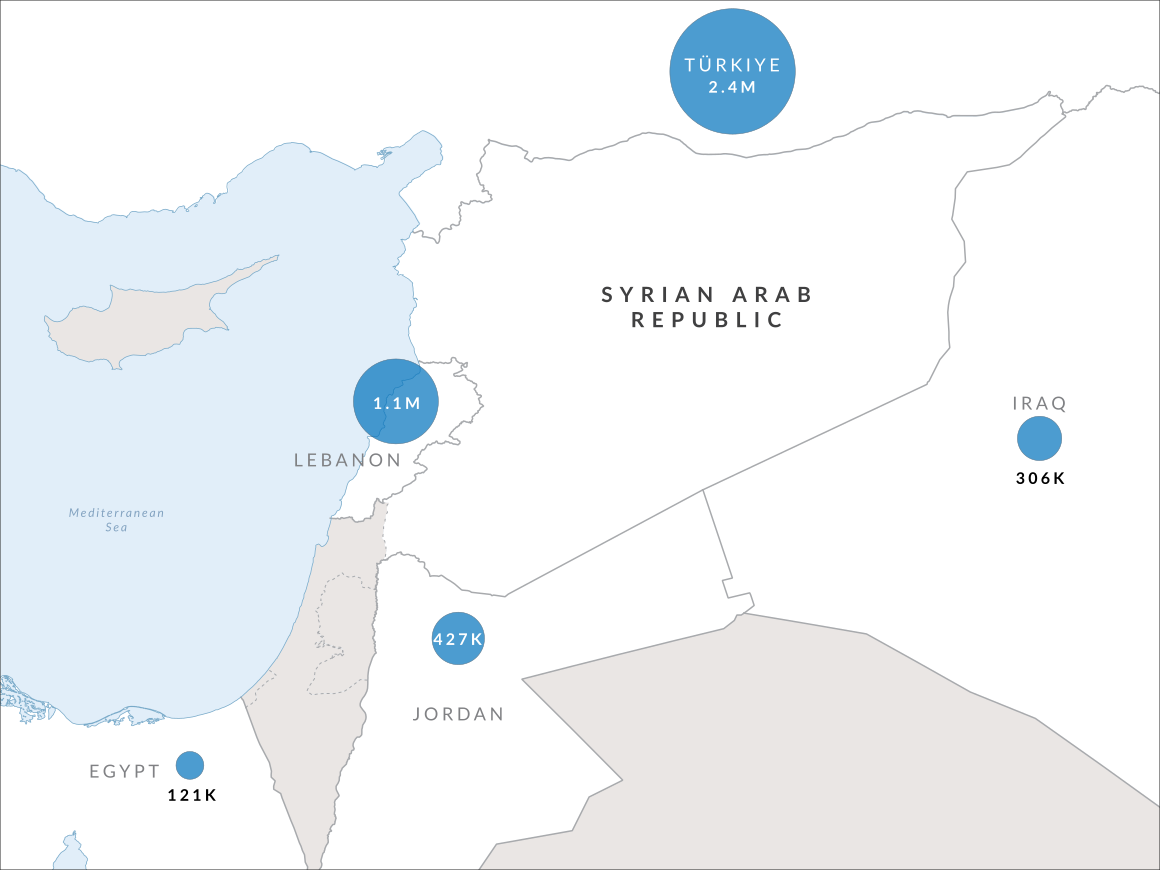
While many eyes are on the rising number of returns, the majority of Syrian refugees will remain in their host countries for the foreseeable future. Economic hardship, residency constraints, and limited access to services continue to affect millions in Türkiye, Lebanon, Jordan, Iraq, and Egypt. Sustained support for host communities and national systems remains essential to preserve protection space and stability across the region. UNHCR and partners continue to assist refugees where they are, ensuring that hope for return does not come at the cost of those still waiting.
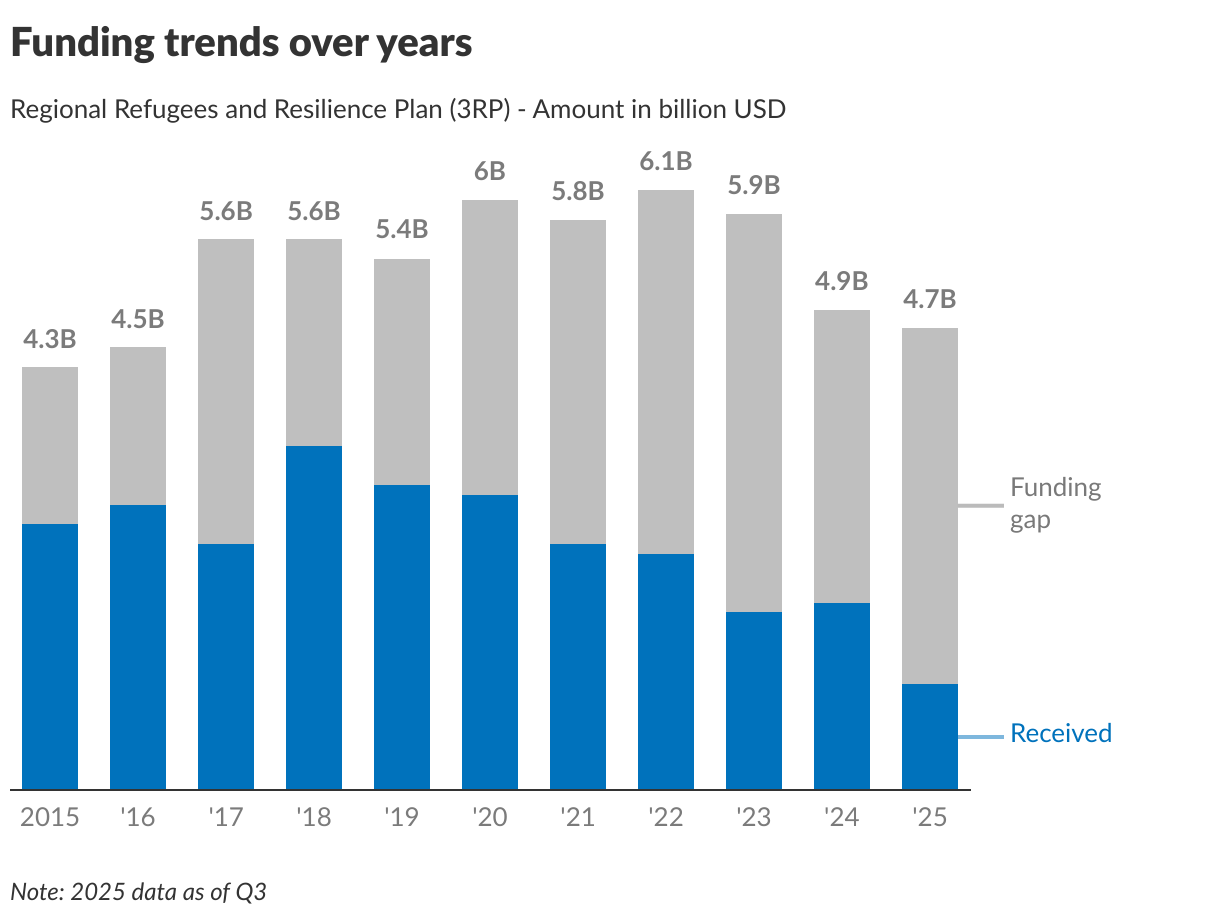
International funding for the regional Syria response has dropped to its lowest level in over a decade, even as needs remain at record highs. In 2024, only 39% of the required funds for the Regional Refugee and Resilience Plan were received.
The shortfall affects every aspect of the response, from food assistance and cash support to education and legal aid, threatening to reverse hard-won gains in protection and stability.
Without predictable support, families who have returned risk falling back into displacement, and host communities face growing hardship.
Sustaining hope means sustaining investment, both inside Syria and across the region.
The next phase needs a dual approach supporting voluntary return for those ready to go home, while sustaining protection and services for those who will remain in exile in the coming years.
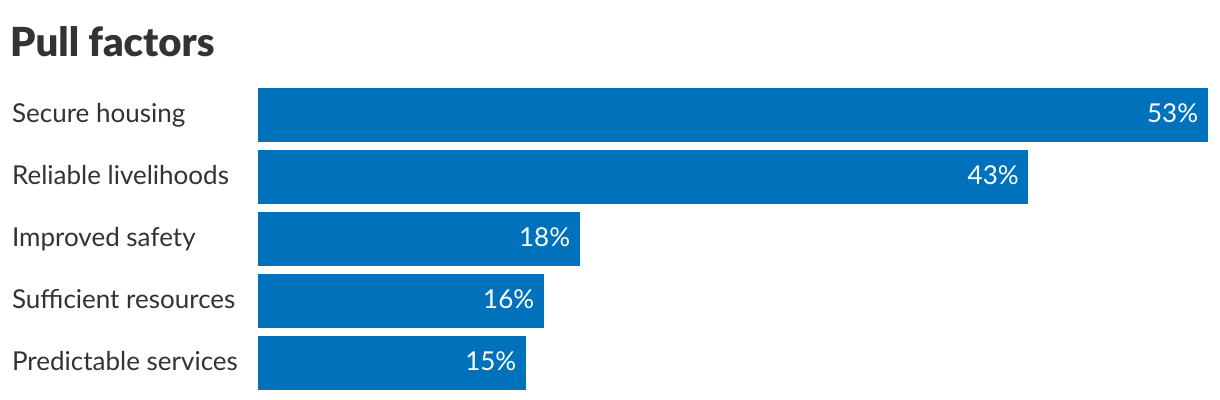
When refugees who currently do not plan to return are asked what would make them reconsider, their answers are clear: secure housing in Syria, reliable livelihoods, improved safety, sufficient resources and predictable basic services. In other words, the conditions that would unlock future returns are the same ones that make current returns sustainable today.
Right now, destroyed homes, economic collapse, and explosive hazards still shape daily life. Yet families keep returning, determined to rebuild what was lost. UNHCR’s protection and monitoring network connects every stage of this journey, from departure to reintegration. The road ahead is long, but each safe return and each repaired home mark a small step toward stability.
Coming Home: One year into Syria’s transition
One year into Syria’s political transition, more than a million refugees have returned, but sustainable reintegration requires urgent investment and coordinated support to ensure returns remain voluntary, safe and dignified.
Read here
Learn more and stay involved: