A brief history of the Global Compact on Refugees in four graphs
Jun 8, 2026
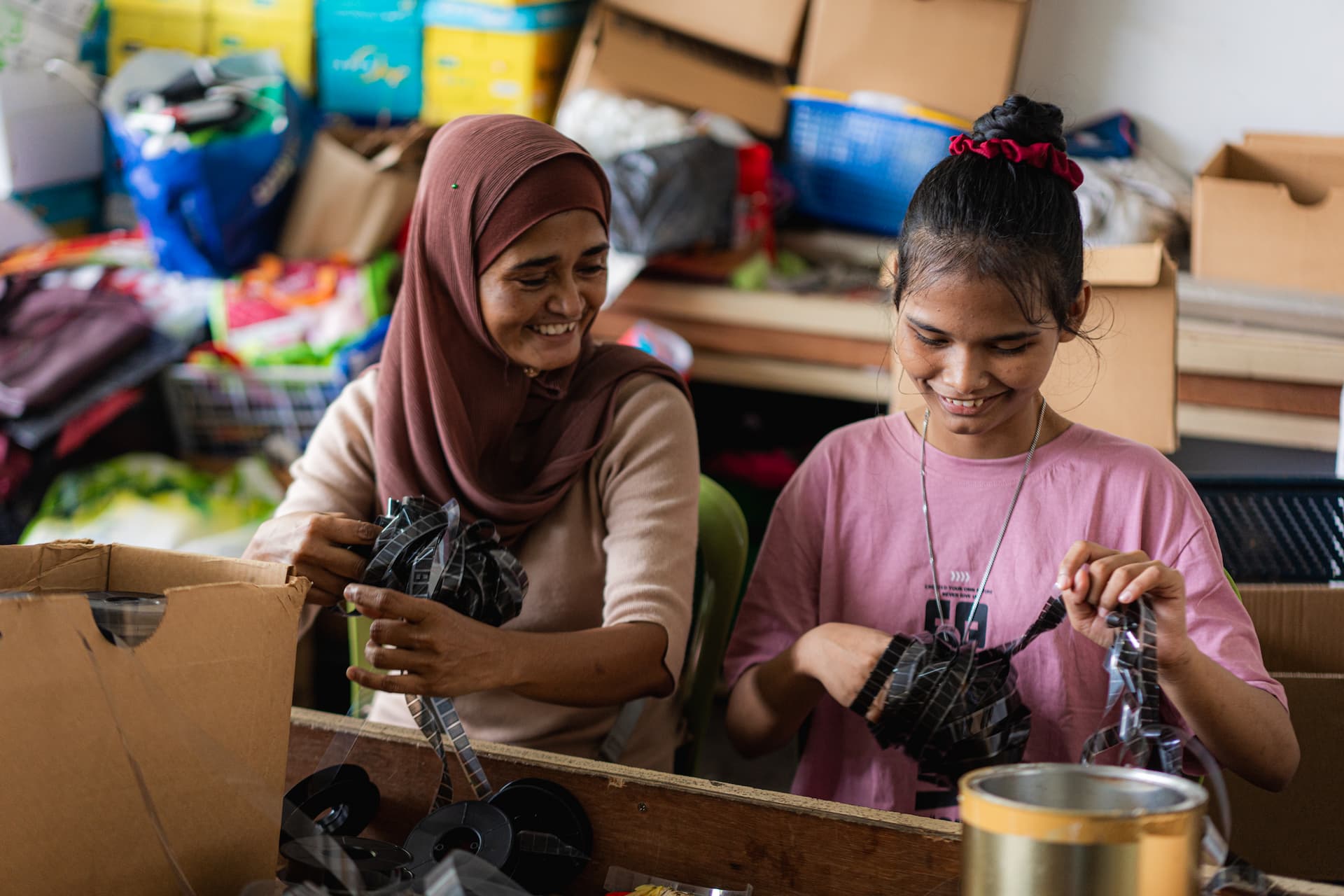
Alyssa, a 14-year-old refugee from Myanmar, spends her weekends volunteering with her mother, Zin Mar Aung, at the Tzu Chi Recycling Centre in Taman Meru, Klang, Selangor. For them, it’s more than just sorting recyclables—it’s a way to spend time together and give back to the community. © UNHCR/Azwan Fakaruddin
Since the adoption of the Global Compact on Refugees (GCR) in 2018, the international community has worked tirelessly to implement it. From making pledges and joining initiatives to attending Global Refugee Forums (GRF) and sharing good practices, the depth and breadth of the work is astonishing. The biennial GCR Indicator Report contains detailed analysis of the progress towards achieving the Compact’s four objectives, to:
- ease pressures on host countries;
- enhance refugee self-reliance;
- expand access to third-country solutions; and
- support conditions in countries of origin for return in safety and dignity.
But what if we take a step back? Here, we explore some of the GCR’s journey so far1 through four graphs.
From promises to action
Since the first GRF in 2019, thousands of individual pledges have been made by actors including States, refugees, NGOs, the private sector, faith leaders, and civil society. More than one in four active pledges have been reported as fulfilled. This excludes pledges which were recently archived.

While progress can be seen throughout the six years to December 2025, the number of fulfilled pledges more than tripled between January 2023 and the end of last year. This shows that despite the increasingly difficult environment in which humanitarian work is operating, the commitment to and belief in the GCR have not wavered.
Disparity among objectives
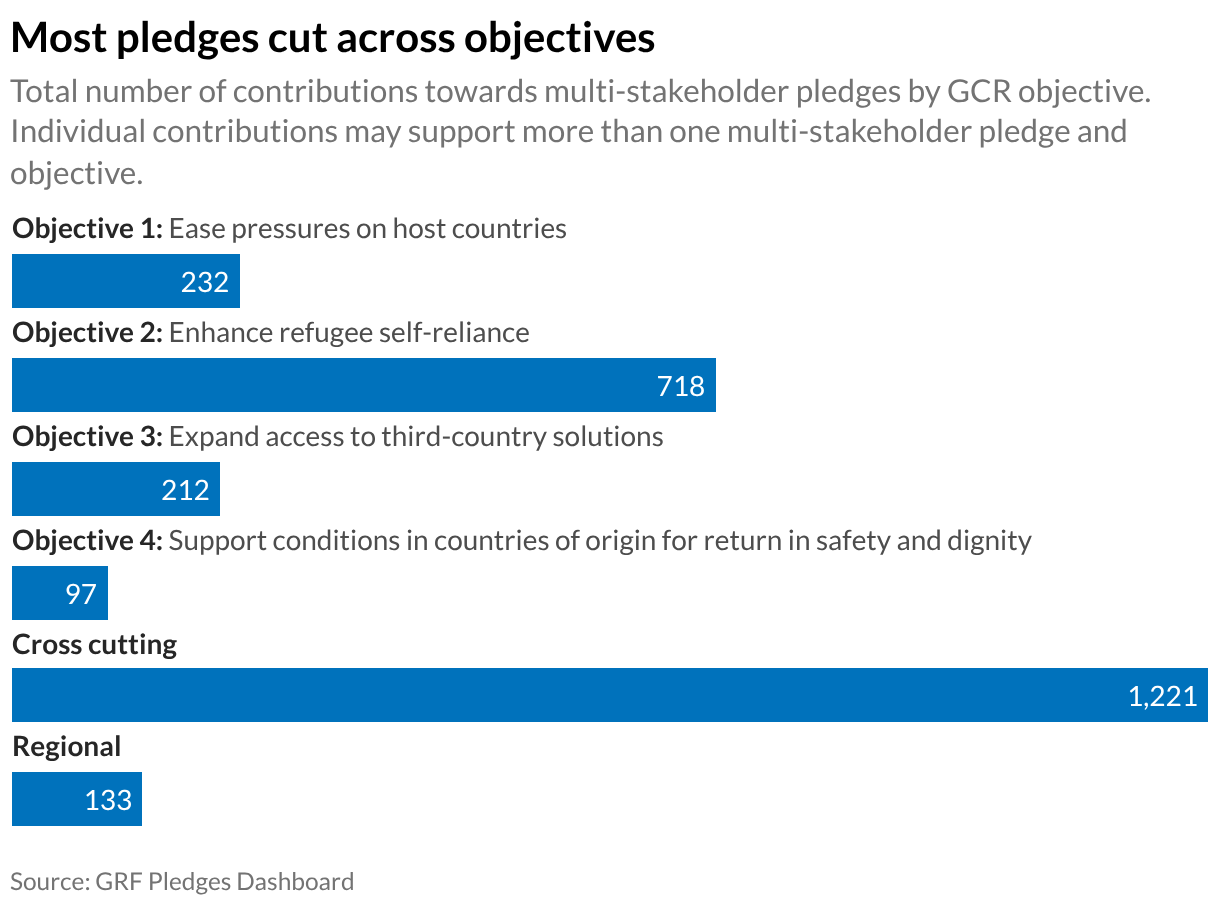
But this progress has not been equal. Looking at contributions towards the multi-stakeholder pledges – umbrella pledges bringing together actors working on specific areas – the majority of support has been for broad, non-objective-specific measures, such as partnerships and protection, and towards the second GCR objective of enhancing refugee self-reliance. Meanwhile, the analysis suggests that the number of commitments towards the third and fourth objectives is lagging behind.
Most commitments under multi-stakeholder pledges – between half and three quarters – are still in progress. Proportionately, the most fulfilled pledges are of those supporting regional, situation-specific work, such as for Rohingya and Afghan refugees (13.5 per cent fulfilled) and for third-country solutions (11.8 per cent fulfilled).
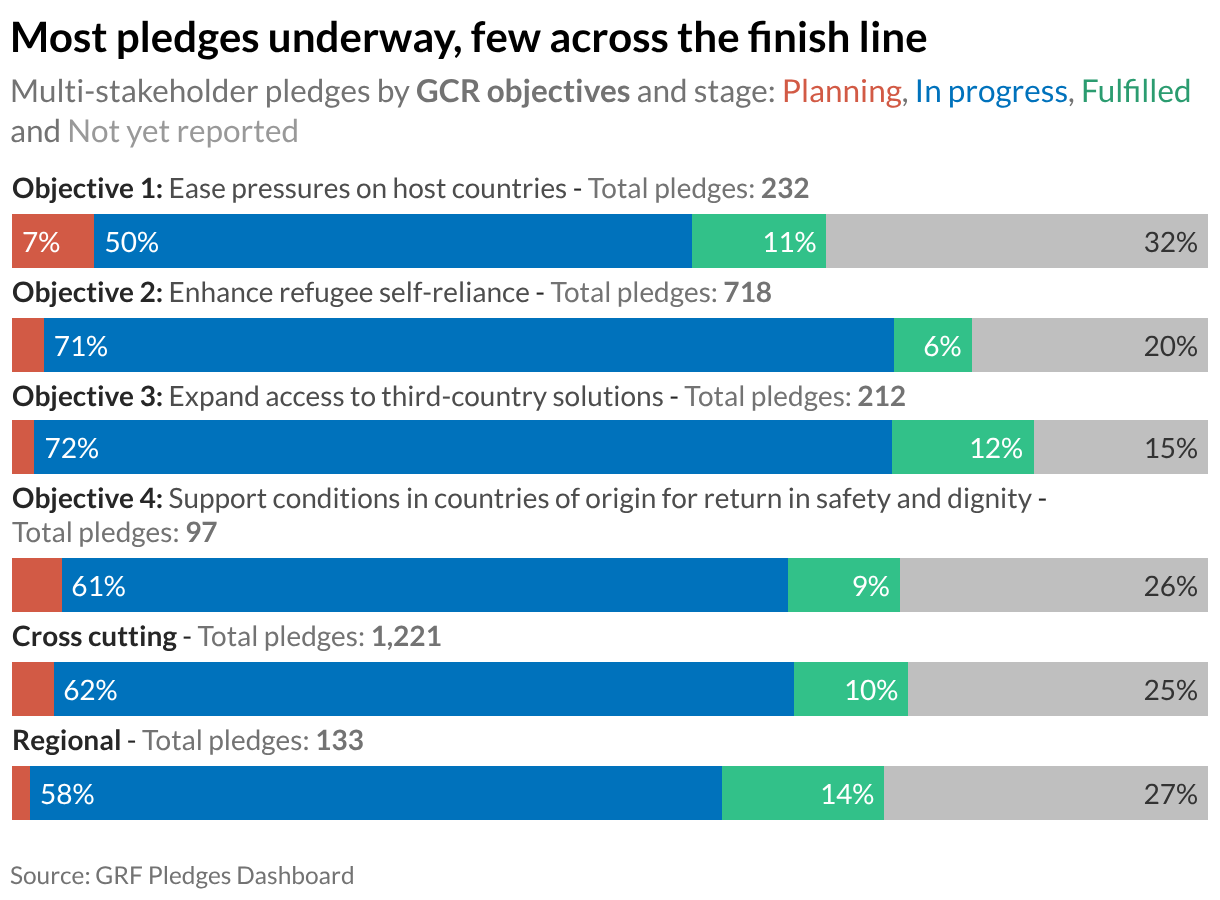
Although it is the GCR objective with the most commitments, enhancing self-reliance has the smallest percentage of fulfilled pledges at only six per cent of the 718 made.
Overall, the lack of reporting on progress remains a challenge, with up to a third of pledges yet to be updated.
Centring meaningful refugee participation
Another key pillar of the Global Compact on Refugees is making sure people with lived experience of displacement have a real and central role in decisions made about them. This requires their full involvement throughout all stages of turning the Compact into action, from planning to delivery to reporting. It requires more than just allowing them to talk; it requires us to listen. To give them a proper seat at the table.
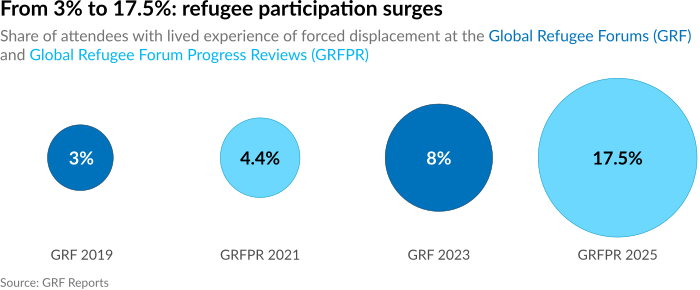
At the first Global Refugee Forum in 2019, around 70 displaced and stateless people attended in person, amounting to less than 3 per cent of the 3,000 participants. Since then, the first GRF Progress Review was held in 2021, followed by the second GRF in 2023 and the second Progress Review in 2025. Over the course of six years from the first GRF, the percentage of attendees with lived experience has nearly sextupled, with almost one in five participants at the GRF Progress Review 2025 having lived experience of forced displacement.
Signs of progress, but what next?
This year marks the 75th anniversary of the 1951 Refugee Convention. Comparably, at only eight years old, the GCR is still in its infancy. But, as the data shows, progress is already being seen, even if not equally across all areas.
The UN High Commissioner for Refugees, Mr. Barham Salih, has set a goal for a 50 per cent reduction in the number of refugees living in a situation of protracted displacement reliant on humanitarian assistance by 2035. The GCR provides a blueprint for more equitable responsibility sharing and long term, sustainable solutions to forced displacement, and the High Commissioner’s ambitious goal can help to accelerate its implementation. Success will be dependent on stakeholders continuing to turn promises into action, on reducing disparity among objectives, and on ensuring the voices and expertise of forcibly displaced people is centred and meaningful in all aspects of planning and delivery.
-
Data for this story is from 11 May 2026. ↩︎