Counted from birth
How birth registration opens doors for children on the move
Sep 30, 2026
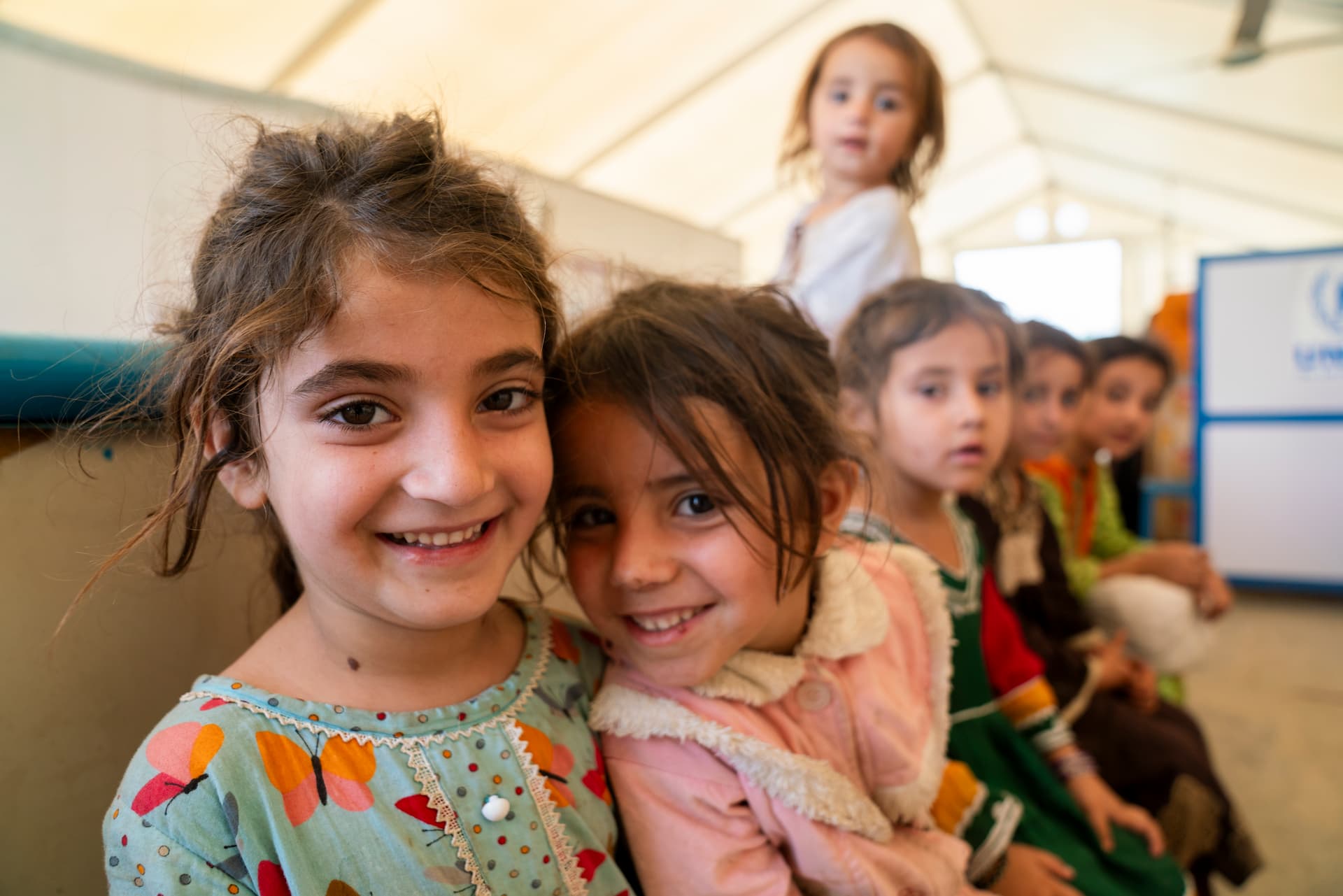
Afghanistan. UNHCR: Exhausted Afghan Families Return Through Torkham Border AmidGrowing Challenges. © UNHCR/Oxygen Empire Media Production
Birth registration provides an official record of a person’s existence and their recognition before the law. It is the foundation of legal identity, and a right that is enshrined in several international human rights instruments. Article 7 of the Convention on the Rights of the Child provides that, “the child shall be registered immediately after birth”, and, under Article 7(2), obliges that States must implement this right particularly where a child would otherwise be stateless. For children affected by forced displacement, who face heightened barriers to birth registration, this makes the evidence on how birth registration shapes their access to rights and services especially important.
Analysis of UNHCR’s Forced Displacement Survey (FDS) across three countries shows that birth registration is more than an administrative formality for children affected by forced displacement. The analysis provides evidence of how birth registration shapes forcibly displaced children’s access services in the host country.
Using existing data to understand the needs of children on the move
Children affected by forced displacement are among the groups most often missing from official statistics. UNHCR’s Forced Displacement Survey (FDS), the agency’s flagship household survey programme, addresses this gap by producing nationally representative statistics on forcibly displaced people in lower- and middle-income countries. It produces data standardised against internationally agreed measures and is disaggregated by age and sex. In households with a child under five, a caregiver is surveyed, producing a child-specific dataset and indicators for further analysis.
The International Data Alliance for Children on the Move (IDAC) recommends 31 indicators, anchored in the Sustainable Development Goal framework, to assess the situation of migrant and forcibly displaced children across four thematic areas: health, education, child protection and poverty. Bringing together the FDS as a data source and IDAC’s globally standardised, child-focused indicators, a series of technical briefs examines the situation of refugee and host community children, analysing birth registration in Cameroon, Pakistan and Zambia with an additional thematic area per country.
Where do these data come from?
Between 2024 and 2025, the FDS reached 13,838 households across the three countries. The populations surveyed reflect very different displacement situations: refugees from the Central African Republic and Nigeria in Cameroon, Afghan refugees1 in Pakistan, and refugees from the Democratic Republic of the Congo, Burundi and Rwanda, alongside Angolan former refugees in Zambia. Across all settings, children comprised approximately half of the refugee population. This highlights the importance of policies and programmes that are inclusive of children and that are based on evidence that accurately assesses their needs.

Birth registration varies by population group across countries
Birth registration of children under five varies for refugee children across the three countries, and so does birth registration in relation to the host community. In Pakistan, 46 per cent of refugee children under five had their birth registered, against 80 per cent of host community children. In Cameroon, the pattern reverses, with 65 per cent of refugee children’s births registered compared with 58 per cent of host community children. Zambia shows the largest contrast of all. There, 71 per cent of refugee children under five births were registered, compared with 38 per cent of former refugee children and 27 per cent of host community children.

The direction of the gap reflects how birth registration reaches families, and the different national policies and mechanisms to include these populations in the civil registration and vital statistics system. Where dedicated campaigns, national policies and settlement-based services support refugees’ access to birth registration, as in Cameroon and Zambia, refugee children’s births are more likely to be registered. These initiatives are run by national entities, often supported by UNHCR, that are mandated to include all children, refugee children among them. Where refugee registration runs through a separate system with additional procedural barriers, as in Pakistan, refugee children fall behind.
Birth registration opens doors
Birth registration does not confer citizenship but creates a permanent legal record of a child’s birth and identity, which can be used to support a child’s claim to nationality. Birth registration often unlocks access to services, and the FDS shows how much it matters in the context of forced displacement.
In Cameroon, children whose births had been registered had around three times higher odds of receiving the measles vaccine than children without a registered birth, a finding consistent across refugee and host community children. In Pakistan, children with registered births were almost five times more likely to attend pre-school than those without. Birth registration, in other words, is not an administrative formality. It is a gateway to health and education in these contexts.

Why does this matter?
None of these findings would be feasible without data that count refugee and host community children and clearly disaggregate the data by age. Producing these data requires survey programmes such as the FDS, and importantly, relies on national statistical systems that include forcibly displaced populations and disaggregate these data by age and sex, so that the children behind these numbers appear in the statistics that inform planning and budgets. Strengthening national data systems and integrating refugees and affected populations into broader development planning are essential to ensure no child is left behind.
Recognising the importance of improving available data on children on the move and to strengthen its child-sensitive and evidence-based approach in its work, UNHCR collaborates with partners through the IDAC to improve data on forcibly displaced children. Explore the full findings, methodology and country context in the three IDAC technical briefs of refugee children’s well-being in Cameroon, Pakistan and Zambia.
- In the Forced Displacement Survey Pakistan High-Level Report, the survey focuses on Afghans holding Proof of Registration (PoR) cards and are referred to as refugees throughout the report and in this Data Spotlight article. ↩︎