Being Counted, Being Included
Statistical inclusion as a foundation for solutions in Asia and the Pacific
Oct 26, 2026
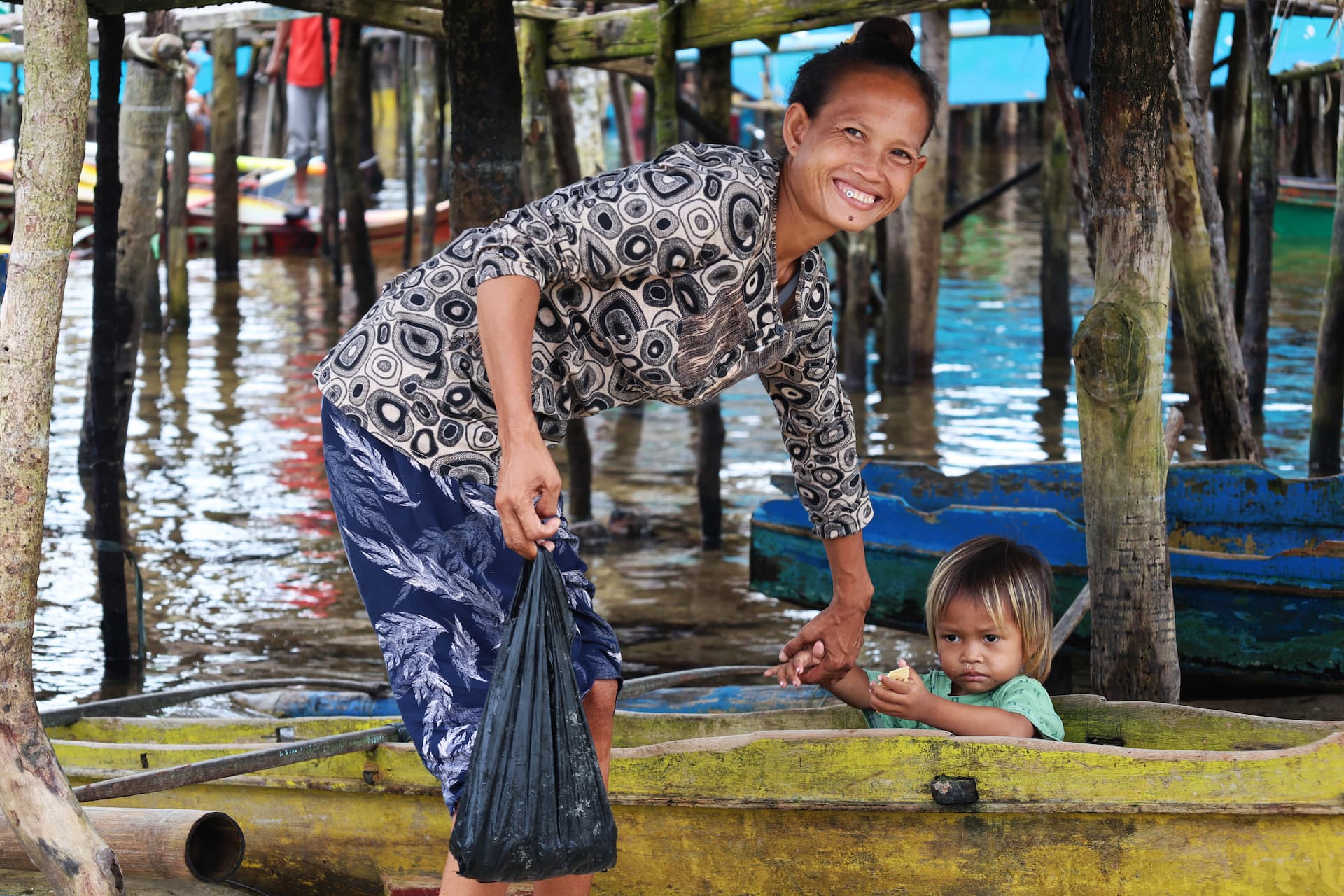
Philippines. Binita Jumaat, a Sama Bajau mother and her child during the mobile birth registration initiative in the Philippines' Bangsamoro region. © UNHCR/Gia Luga
People who are missing from national statistics often remain invisible in the policies, budgets, and public services that shape daily life. When official surveys and censuses overlook displaced and stateless communities, their lived realities, specific challenges, and socio-economic contributions go unrecorded.
Statistical inclusion – the deliberate, standardized enumeration and identification of refugees, asylum-seekers, internally displaced, and stateless persons within national statistical systems – is the critical step toward ending this invisibility.
At its core, statistical inclusion is not merely a technical exercise in data collection. It is a strategic mechanism for equity, governance, and long-term development. By intentionally including forcibly displaced and stateless populations in national censuses, nationwide household surveys, and civil registration systems, governments generate reliable, disaggregated evidence, ensuring comparability over time.
This evidence places the living conditions, skills, and vulnerabilities of forcibly displaced populations alongside those of host communities. When decision-makers have access to rigorous data, they can move away from short-term emergency assumptions and design development plans, social protection schemes, and public resource allocations that leave no one behind.
A Growing Regional Movement: Momentum Across Asia and the Pacific
Over the past few years, the Asia-Pacific region has witnessed encouraging momentum in integrating marginalized populations into national statistical systems. A pivotal catalyst was the 2023 Global Refugee Forum (GRF), where the Multi-stakeholder Pledge on the Inclusion of Forcibly Displaced and Stateless Persons in National Statistical Systems and Surveys garnered over 100 commitments worldwide. Demonstrating leadership and ownership, Asia and the Pacific accounted for approximately 16 per cent of all State and UN Country Team pledges on statistical inclusion.
Across Asia and the Pacific, governments are taking important steps to ensure forcibly displaced and stateless populations are counted in national data systems:
-
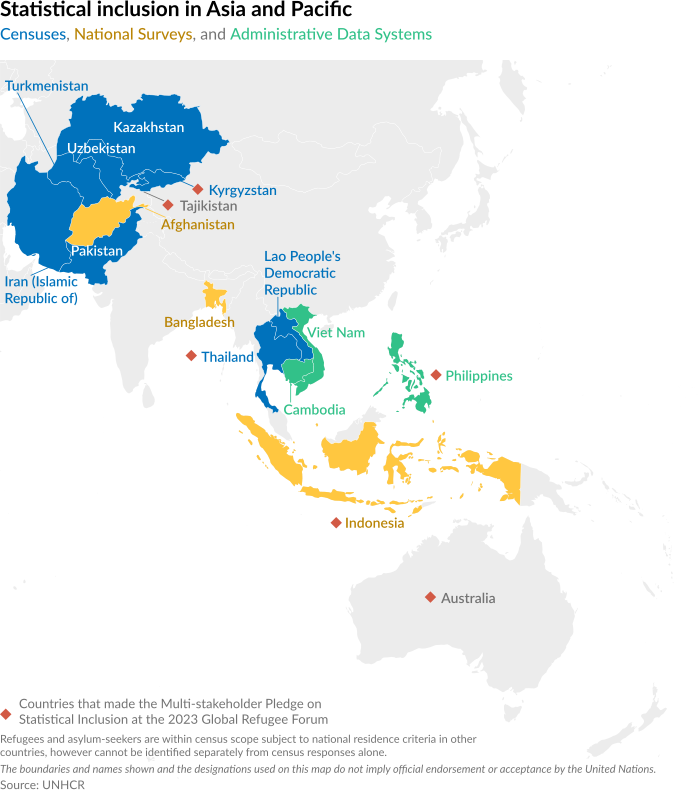
Pioneering Censuses: Central Asian States have set strong benchmarks. Recent rounds in Kazakhstan (2022), the Kyrgyz Republic (2022), Turkmenistan (2022), and Uzbekistan (2026) systematically enumerated stateless persons. In South Asia, Pakistan’s 2023 Digital Census marked an important milestone by enumerating registered refugees.
-
Longstanding Regional Good Practice: The Islamic Republic of Iran has demonstrated sustained leadership by incorporating refugees across its last three national population censuses, with plans to cover all foreign nationals – including forcibly displaced Afghans – in its 2026 census exercise.
-
National Household and Specialized Surveys: Beyond decennial censuses, national surveys offer high-frequency socio-economic insights. In Bangladesh, refugees have been captured through the Multiple Indicator Cluster Survey and the World Health Survey Plus. Similarly, Indonesia’s intercensal population survey reflected both refugees and stateless people.
-
Inclusive Administrative Data Systems: The Philippines has demonstrated regional leadership in advancing inclusive civil registration systems, helping ensure that vulnerable and at-risk populations are captured in official records and reflected in national statistics.
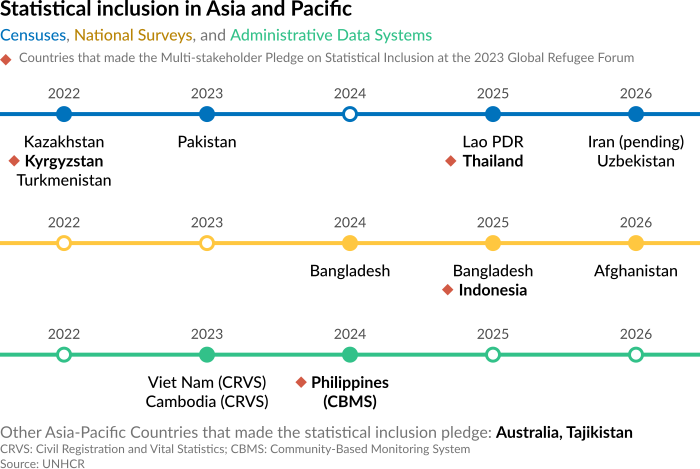
Countries are demonstrating that statistical inclusion is feasible, adaptable, and mutually beneficial for national planning. Whether by introducing standardized identification questions into censuses and surveys, harmonizing household living standard surveys, or advancing inclusive Civil Registration and Vital Statistics (CRVS) systems in line with the Asia-Pacific CRVS Decade, countries across the region are demonstrating that statistical inclusion is both feasible and beneficial for national planning. Yet important gaps remain. Many forcibly displaced and stateless populations continue to be underrepresented in official statistics, limiting evidence-based policymaking and service delivery. Sustained investment, stronger national systems, and continued collaboration between governments, national statistical offices, UN agencies, and development partners will be essential to ensure that no one remains invisible in data.
Country in Focus: Translating Data into Solutions in Thailand
Thailand offers a compelling, practical example of how data and policy reform reinforce each other to produce transformative solutions. As a regional leader on inclusion, Thailand is showing how statistical visibility accelerates legal identity and socio-economic integration.
The inclusion of stateless people in Thailand’s 2025 national census marks a historic breakthrough. Historically underrepresented in official data, stateless individuals are now visible in the baseline evidence guiding national investments in healthcare, education, and municipal planning. This statistical visibility complements Thailand’s landmark October 2024 Cabinet Resolution, which has already enabled over 120,000 stateless people to gain permanent residence and nationality through accelerated pathways, with a targeted emphasis on eradicating childhood statelessness.
When governments pair progressive legal frameworks with rigorous data collection, the path from policy design to real-world impact becomes clearer. Reliable data enables authorities to identify where administrative bottlenecks occur, track whether eligible children are successfully receiving birth registration and legal identity documentation, and monitor socio-economic outcomes over time. Thailand’s approach shows that counting people is not the end goal; rather, it provides the roadmap for durable solutions.
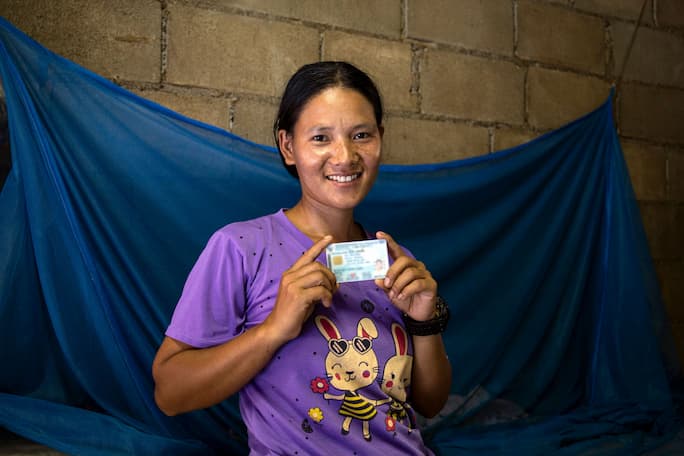
Thailand. Meepia was formerly stateless and received her Thai nationality at the age of 34 with the help of grassroots NGOs. © UNHCR/Rachaphon Riansiri
Powering the “50 by 35” Vision: From Evidence to Self-Reliance and Durable Solutions
Statistical inclusion is directly tied to UNHCR’s global “50 by 35” vision: the ambition to reduce by half the number of refugees in protracted displacement who remain dependent on humanitarian assistance by 2035. Progress towards this ambition is pursued through two complementary tracks: supporting refugees to become self-reliant, and advancing durable solutions that allow them to rebuild their lives with secure and lasting protection. Achieving this transformation requires shifting from short-term humanitarian relief to sustainable development, self-reliance, and inclusion in national public systems while also expanding opportunities for voluntary repatriation, local integration, resettlement and other durable solution pathways.
To reduce dependency and advance durable solutions, displaced people require access to labor markets, financial services, education, healthcare, legal identity and documentation. Yet governments, international financial institutions and other stakeholders cannot direct resources or measure progress without accurate baseline data. Inclusive national data systems answer foundational policy questions:
-
Who is achieving economic self-reliance, and who remains marginalized?
-
Where are public services effectively absorbing displaced families alongside local hosts?
-
What systemic barriers – such as lack of documentation – impede self-reliance?
-
Which populations are achiving durable solutions, and where are legal, protection or socioeconomic barriers slowing progress?
International recommendations on refugee, internally displaced persons and statelessness statistics, developed by the Expert Group on Refugee, IDP and Statelessness Statistics (EGRISS), offer practical guidance, while country experiences show how these standards can be applied through censuses, surveys and civil registration systems.
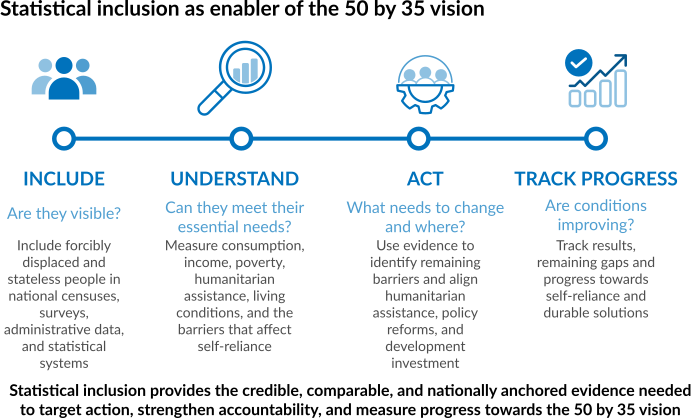
The progress made across Asia and the Pacific demonstrates that inclusive data systems are well within reach. As countries modernize their statistical infrastructure and prepare upcoming census and survey rounds, an unprecedented opportunity emerges to generate the evidence needed for both self-reliance and durable solutions.
Through partnerships, investment in statistical capacity, and embracing inclusive data standards, the international community and national governments can ensure that forcibly displaced and stateless populations are no longer invisible. Statistical inclusion can show not only whether refugees and stateless people are becoming less dependent on humanitarian assistance, but also whether they are progressing towards safe, voluntary and lasting solutions.
When people are counted in national data, governments and partners are better equipped to design, target and measure the policies and investments that make solutions possible.